


Beginn des Seitenbereichs:
Seitenbereiche:

  • Zum Inhalt (Zugriffstaste 1)
  • Zur Positionsanzeige (Zugriffstaste 2)
  • Zur Hauptnavigation (Zugriffstaste 3)
  • Zur Unternavigation (Zugriffstaste 4)
  • Zu den Zusatzinformationen (Zugriffstaste 5)
  • Zu den Seiteneinstellungen (Benutzer/Sprache) (Zugriffstaste 8)
  • Zur Suche (Zugriffstaste 9)

Ende dieses Seitenbereichs. Zur Übersicht der Seitenbereiche

Beginn des Seitenbereichs:
Seiteneinstellungen:

Deutsch de
Suche
Anmelden

Ende dieses Seitenbereichs. Zur Übersicht der Seitenbereiche

Beginn des Seitenbereichs:
Suche:

Suche nach Details rund um die Uni Graz
Schließen

Ende dieses Seitenbereichs. Zur Übersicht der Seitenbereiche


Suchen

Beginn des Seitenbereichs:
Hauptnavigation:

Seitennavigation:

  • Universität

    Universität
    • Die Uni Graz im Portrait
    • Organisation
    • Strategie und Qualität
    • Fakultäten
    • Universitätsbibliothek
    • Jobs
    • Campus
    Lösungen für die Welt von morgen entwickeln – das ist unsere Mission. Unsere Studierenden und unsere Forscher:innen stellen sich den großen Herausforderungen der Gesellschaft und tragen das Wissen hinaus.
  • Forschungsprofil

    Forschungsprofil
    • Unsere Expertise
    • Forschungsfragen
    • Forschungsportal
    • Forschung fördern
    • Forschungstransfer
    • Ethik in der Forschung
    • Kommission für wissenschaftliche Integrität
    Wissenschaftliche Exzellenz und Mut, neue Wege zu gehen. Forschung an der Universität Graz schafft die Grundlagen dafür, die Zukunft lebenswert zu gestalten.
  • Studium

    Studium
    • Studieninteressierte
    • Infos für Studierende
    • Lehramt Aufnahmeverfahren
  • Community

    Community
    • International
    • Am Standort
    • Forschung und Wirtschaft
    • Absolvent:innen
    Die Universität Graz ist Drehscheibe für internationale Forschung, Vernetzung von Wissenschaft und Wirtschaft sowie für Austausch und Kooperation in den Bereichen Studium und Lehre.
Jetzt aktuell
  • Aufnahmeverfahren 2026
  • Uni Vibes - das Fest
  • Jetzt die "Youni"-App holen
  • Klimaneutrale Uni Graz
  • Forscher:innen gefragt
  • Arbeitgeberin Uni Graz
Menüband schließen

Ende dieses Seitenbereichs. Zur Übersicht der Seitenbereiche

Beginn des Seitenbereichs:
Sie befinden sich hier:

Universität Graz Smart Regulation Neuigkeiten Research Visit to the Emerging Technologies Lab and the ARC Centre of Excellence for Autom
  • Über uns
  • Forschung
  • Symposium
  • Forschungsgruppe [Sm-AI-R]
  • Winter School 2025
  • Kontakt
  • Neuigkeiten

Ende dieses Seitenbereichs. Zur Übersicht der Seitenbereiche

Donnerstag, 07.05.2026

Research Visit to the Emerging Technologies Lab and the ARC Centre of Excellence for Autom

Research Visit

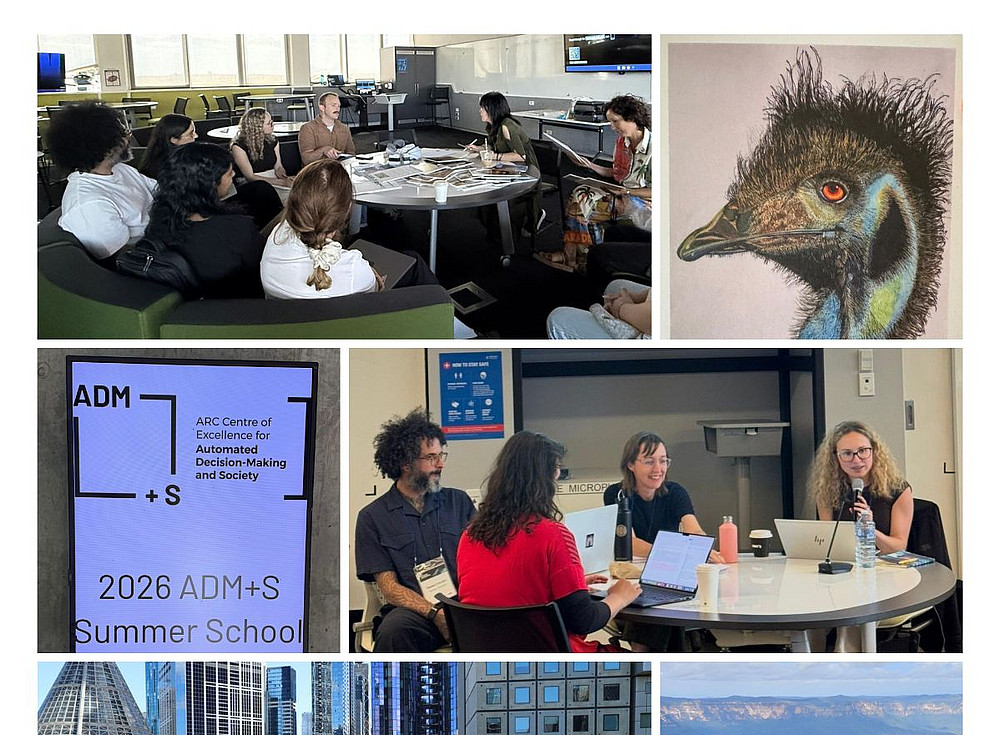
Earlier this year, Sara Skardelly spent six weeks as a PhD visitor at the Emerging Technologies Research Lab (ETLab) at Monash University and joined the ARC Centre of Excellence for Automated Decision-Making and Society (ADM+S). The visit strengthened her methodological toolkit in visual ethnography and deepened her engagement with debates on responsible and inclusive automated decision-making.

Founded in 2018 by design and futures anthropologist Professor Sarah Pink, ETLab is an interdisciplinary and international research community, widely recognised as a pioneer in methodological innovation. A method at the core of many of its projects is the use of video to produce new ways of knowing, understanding, and sharing research.
During her stay, Sara engaged with visual ethnography and joined a seminar on documentary filmmaking, where scholars including Jeni Lee and Sarah Pink discussed editing styles and practices - underscoring how central editing is to storytelling. She now intends to use visual ethnography as a methodological approach in her doctoral research.
Sara also joined the ADM+S and was a visitor at RMIT University (Royal Melbourne Institute of Technology). ADM+S is a crossdisciplinary, national research centre that aims to create the knowledge and strategies necessary for responsible, ethical, and inclusive automated decision-making.Among other activities, she joined the ADM+S Summer School. Over four days, she took part in workshops, mentoring sessions, and social activities, building connections across the Centre and sharpening her conceptual approach. One workshop, led by Kimberlee Weatherall and focusing on different governance modes for the regulation of emerging technologies such as communicative AI, was particularly relevant. 
While regulation is often associated with laws, soft laws, and standards, the workshop included exercises exploring other modes of regulation and emphasised that there are many regulatory tools that nations can draw on, such as nodality. This refers to the government’s position at the centre of social networks, allowing it to collect and distribute information via campaigns, benchmarking, and nudges. The concept offered a useful lens for Sara’s research on
how actors such as policymakers anticipate communicative AI as linked to care.
She concluded her stay by participating in a two-day symposium, “Anticipatory Infrastructures”. The event was hosted by ETLab (Monash University) and co-organised by the Academy of Mobility Humanities (Konkuk University). The symposium brought together social science, arts, and humanities researchers working with the concept of anticipatory infrastructures - the idea that almost all infrastructures are not only highly anticipated (loaded with promise and expectation as (infra)structures of feeling), but also anticipate making something possible (for example, new forms of care). Infrastructures also mediate temporalities through their material legacies, shaping the affordances around which futures are anticipated.
In line with this concept, Sara joined a panel on care and presented a draft paper co-authored with Juliane Jarke, titled “Communicative AI as Anticipatory Infrastructures of Care Futures”. Her research stay was financially supported by Smart Regulation, alongside the ComAI project and Land Steiermark.

About Sara Skardelly
Sara Skardelly is a PhD researcher at the University of Graz, affiliated with the Department of Sociology and the Center for Data Science in Business and Society. She is also an associated member of the Field of Excellence “Smart Regulation”. Her research explores the intersection of emerging technologies
(especially communicative AI), infrastructures, and care, with a focus on anticipations and narratives. Her current work also engages with creative methods (especially erasure poetry and participatory filmmaking) within social research. She is also a member of the ComAI research unit and the Graz Sociodigital and Participatory Futures Studio.

Weitere Artikel

Detecting Resale Price Maintenance with Unsupervised Machine Learning

New publication: Journal of Competition Law & Economics - Valentin Forster, Jürgen Fleiß, Dominik Kowald, Viktoria Robertson

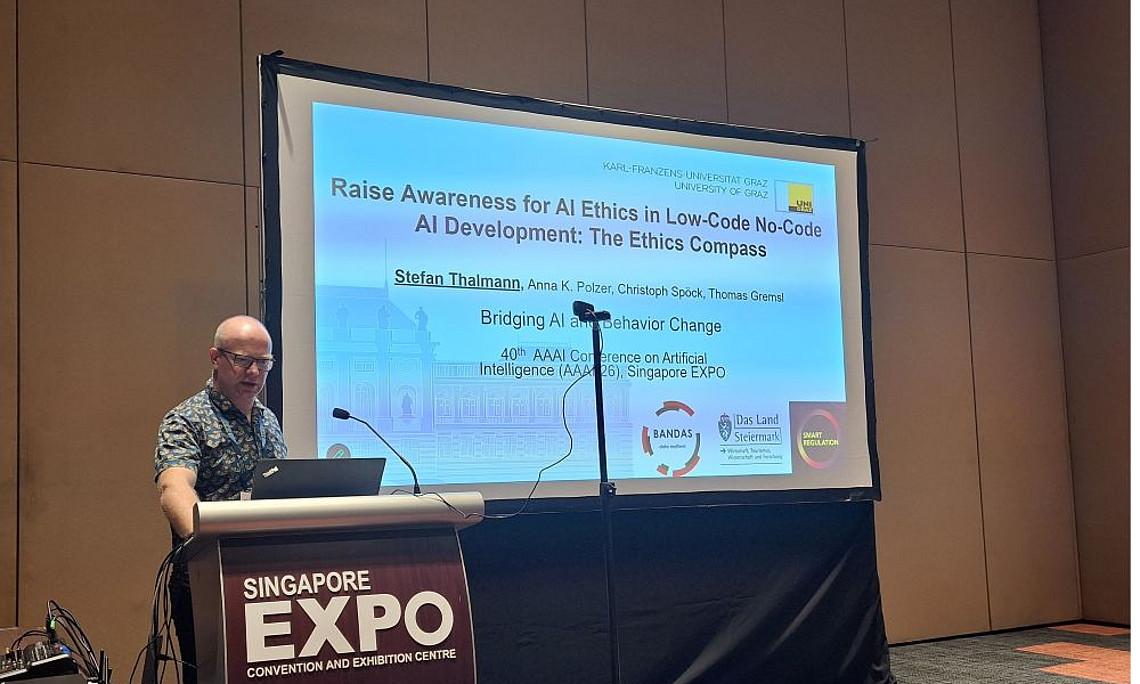
Presentation at the AAAI Conference on Artificial Intelligence

Paper “Raise Awareness for AI Ethics in Low-Code No-code AI Development: The Ethics Compass"

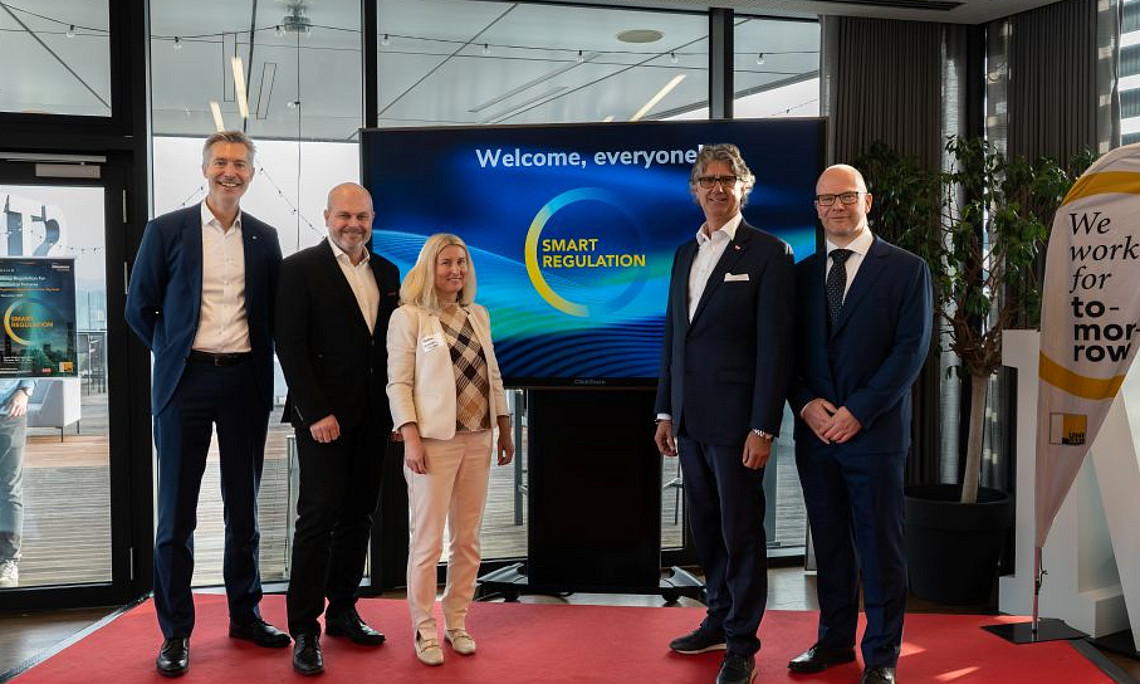
Smart Regulation Symposium mit Weitblick

Rethinking Regulation for Sociotechnical Futures: Das sechste Smart Regulation Symposium fand am 7. November 2025 erstmals im wunderschönen Skyroom des Styria Media Centers in Graz statt und bot einen visionären Blick auf die Herausforderungen und Chancen von morgen.

Public Policy Responses to AI

New publication by Andreas Schaefer (University of Bath) and Maik T. Schneider (University of Graz).

Beginn des Seitenbereichs:
Zusatzinformationen:

Universität Graz
Universitätsplatz 3
8010 Graz
  • Anfahrt und Kontakt
  • Kommunikation und Öffentlichkeitsarbeit
  • Moodle
  • UNIGRAZonline
  • Impressum
  • Datenschutzerklärung
  • Cookie-Einstellungen
  • Barrierefreiheitserklärung
Wetterstation
Uni Graz

Ende dieses Seitenbereichs. Zur Übersicht der Seitenbereiche

Ende dieses Seitenbereichs. Zur Übersicht der Seitenbereiche

Beginn des Seitenbereichs:

Ende dieses Seitenbereichs. Zur Übersicht der Seitenbereiche